Top 10 Heat Resistant Powder Coating Solutions for Your Projects?
In the world of industrial applications, durability is key. Heat resistant powder coating is essential for surfaces exposed to high temperatures. This coating provides protection against corrosion, wear, and fading. As projects become more demanding, choosing the right powder coating solution becomes crucial.
Finding a reliable heat resistant powder coating can be challenging. The market is flooded with options, each claiming to withstand extreme conditions. However, not all coatings are created equal. Some may not deliver the promised performance. This leads to unexpected failures and costly repairs.
In this guide, we will explore the top 10 heat resistant powder coating solutions. Each option has been evaluated based on its effectiveness and longevity. You'll discover products that have proven reliable in real-world applications. Our focus is on materials that stand the test of time, helping you make informed decisions for your projects.
Best Practices for Selecting Heat Resistant Powder Coating Solutions
When selecting heat resistant powder coating solutions, consider
the environment in which the coated items will be used. High temperatures affect material performance.
Make sure you assess both the max temperature exposure and duration. This evaluation is crucial
for long-lasting results.
Durability is fundamental. Look for powder coatings designed specifically for harsh conditions.
They should resist chipping, scratching, and fading. Pay attention to the application process. Sometimes,
the quality of the finish is compromised during application. Improper curing can lead to dissatisfaction
in performance.
Another key aspect is the finish quality. Aesthetics matter, but it should not come at
the cost of durability. Consider the visual appeal as well as functionality. A beautiful finish that
chips easily loses its value. Reflect on your priorities: is it the color, texture, or
the longevity of the coat? Balancing these factors can be challenging, yet essential for project success.
Key Factors to Consider for Heat Resistance in Powder Coatings
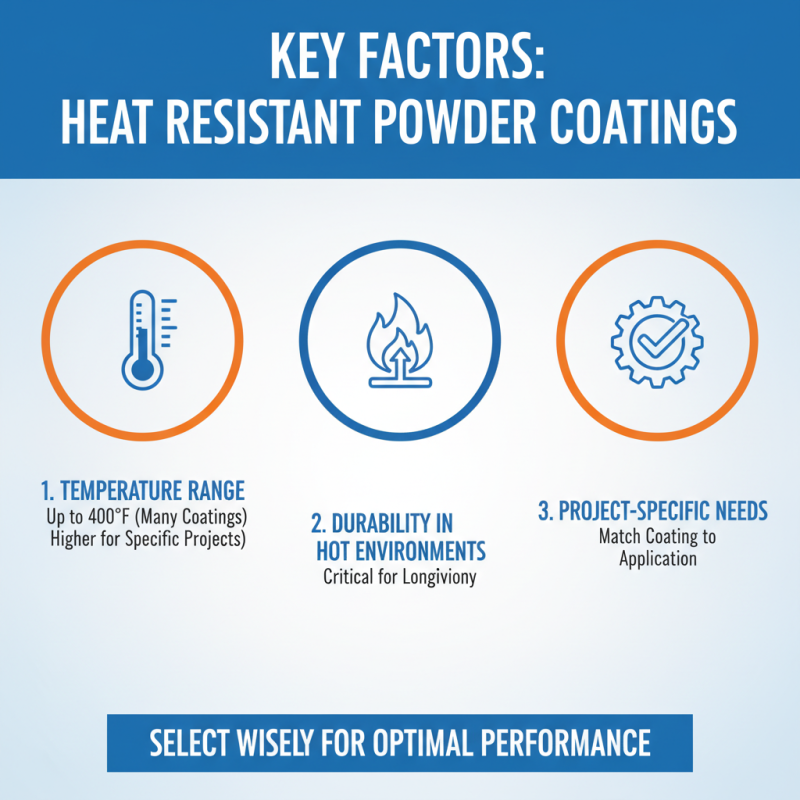
When selecting heat-resistant powder coatings, several key factors demand careful consideration. The temperature resistance of a coating is critical. Many coatings can withstand up to 400°F, offering durability in hot environments. However, some projects may need coatings that endure higher temperatures. Knowing the specific temperature range needed for your project helps narrow down options.
The formulation of the powder is also essential. Various resins affect the finish and heat resistance. Epoxy-based powders often show good heat resistance, but they may not be suitable for outdoor applications due to UV sensitivity. Polyester powders are another alternative, providing both durability and color retention in sun exposure.
Moreover, the application process matters significantly. Proper surface preparation can enhance adhesion and longevity. Poor application technique can lead to peeling or bubbling under heat. Testing small samples before full application is advisable. This small step can avoid costly mistakes and guarantee that the finish meets your needs.
Overview of Popular Heat Resistant Powder Coating Products
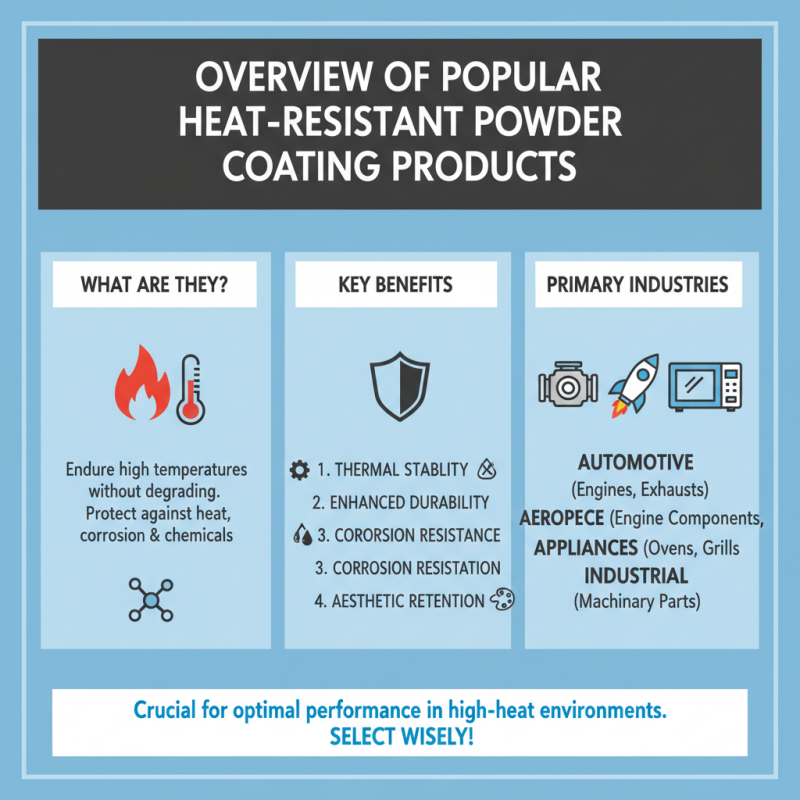
Heat-resistant powder coatings are essential for various applications. These products are designed to endure high temperatures without degrading. Many industries benefit from them, including automotive, aerospace, and appliances. Selecting the right powder coating is crucial for optimal performance.
When considering heat-resistant options, experts recommend checking the temperature ratings. Most products have specific limits. Heat resistance typically ranges from 200°F to over 1,000°F. It's vital to match the coating to your project needs. Always assess the environment in which the coated item will be used. For instance, outdoor applications require coatings that resist UV exposure.
Tips: Ensure the surface is properly prepped before coating. Contaminants can lead to poor adhesion. Also, product compatibility is key; not all coatings work well with every substrate. A small test application can save you from costly mistakes. Make sure to follow the manufacturer's instructions for the best results.
Application Techniques for Achieving Optimal Results with Powder Coatings
Applying powder coatings effectively requires careful attention to technique.
Proper surface preparation is essential. Before coating, ensure surfaces are clean, dry, and free of contaminants.
This stage impacts adhesion and finish quality.
Uneven surfaces may lead to peeling or chipping later on.
Tips: Use a media blaster or a suitable cleaning agent to remove oils and debris. Consider sanding any rough patches for a smoother application.
Control the environment during application. Humidity and temperature can affect curing. When applying coatings, aim for consistent thickness.
Uneven layers can create weak spots in the finish.
Tips: If you’re working in high humidity, wait for a better day. Use a digital thermometer and hygrometer to monitor conditions.
Be mindful of your equipment settings. Adjust spray pressure and nozzle size according to your material.
Test your setup beforehand on scrap pieces.
This ensures the right finish and reduces waste.
Tips: Keep a checklist of equipment settings for different projects. Review it regularly to improve efficiency.
Comparison of Performance Metrics for Heat Resistant Coating Options
When choosing heat-resistant powder coatings, performance metrics are crucial.
Temperature tolerance is a primary factor. Some coatings can withstand up to 1,200°F, making them suitable for various high-heat applications.
Others may falter under lower temperatures, which can lead to failure in critical projects.
Durability is another essential metric. Look for coatings that resist chipping and scratching.
Some products may perform well at high temperatures but lack the toughness needed for real-world use.
A balance between heat resistance and mechanical strength is vital.
Tips: Always conduct a small test application before large projects.
Test for adhesion and heat resistance. Evaluate the finish after curing. This step can save time and resources.
Additionally, consider the environment where the coating will be applied.
Factors like humidity and exposure to chemicals can affect performance.
Some coatings may require special application techniques to achieve optimal results.
Always review the technical data sheets for detailed guidance.
Tips: Don't overlook the curing process.
Inadequate curing can result in poor performance.
Adjust your approach based on the specific requirements of each project.
Careful planning and testing will yield the best outcomes.