
Leave Your Message

China Top Antistatic Powder Coating Suppliers

Choosing reliable China top antistatic powder coating suppliers requires more than comparing prices or product catalogs. Antistatic Powder Coating helps control surface resistance, reduce electrostatic discharge, and protect sensitive equipment. Its value appears in practical settings, such as electronics workshops, cleanrooms, laboratories, and industrial enclosures. A good supplier should explain how the coating performs on steel, aluminum, and other approved substrates. It should also provide clear technical data, application guidance, and batch traceability.

Experience matters here. Skilled manufacturers can discuss powder formulation, curing temperatures, film thickness, and surface preparation without hiding behind vague claims. They should show test reports from qualified laboratories and describe relevant standards accurately. However, certificates alone are not enough. Ask for recent samples. Inspect the finish under real lighting. Measure surface resistance after curing, not only before shipment. Small details matter, including packaging quality, moisture protection, color consistency, and delivery communication.

Some suppliers offer excellent laboratory results but weaker field support. That gap deserves attention. A trustworthy partner welcomes technical questions and admits product limitations. This is important because antistatic performance may change with humidity, substrate condition, cleaning methods, and wear. No single formula fits every project. Buyers should compare verified data, production capacity, quality controls, and after-sales service together. The strongest suppliers combine stable manufacturing with honest communication. They do not promise impossible results. Instead, they help customers select a practical Antistatic Powder Coating system for the intended environment, application process, and service life. That is a more dependable starting point.
China Top Antistatic Powder Coating Suppliers

What Antistatic Powder Coating Is and How It Works

China Top Antistatic Powder Coating Suppliers

What Antistatic Powder Coating Is and How It Works

Antistatic powder coating is a dry polymer finish designed to control electrostatic charge. Unlike ordinary coatings, it contains conductive or static-dissipative ingredients. These ingredients create a controlled path for charge to move across the surface. The charge then flows gradually toward a grounded structure instead of building up suddenly.

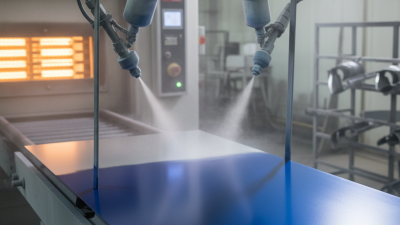
The process begins with electrostatic spraying. Charged powder particles attach to a prepared metal surface, then melt and cure inside an oven. Film thickness matters. Too much coating can interrupt conductivity, while an uneven layer may create inconsistent readings. During practical trials, technicians should check surface resistance with calibrated equipment. They should also confirm the panel, rack, and equipment have a continuous grounding path.

A clean surface is essential. Dust, oil, and poor pretreatment can weaken adhesion and change performance. Humidity also affects results, sometimes more than expected. A smooth finish does not prove effective antistatic control. I have seen attractive test panels fail after grounding was overlooked. That mistake is easy to repeat. China-based suppliers should provide technical data, application guidance, and batch testing records. Buyers should request results under clearly stated humidity, film thickness, and curing conditions. Performance depends on the complete system, not the powder alone.


Key Features and Performance Standards for Antistatic Powder Coatings

China Top Antistatic Powder Coating Suppliers

Key Features and Performance Standards for Antistatic Powder Coatings

Reliable antistatic powder coatings should control surface resistance without sacrificing adhesion, hardness, or corrosion protection. The target resistance range depends on the application, grounding design, and electrical safety plan. A coating may perform well in dry air but lose consistency under high humidity. That weakness deserves attention. In production trials, measure resistance across several points, not only one polished area. Check coating thickness, curing temperature, impact strength, and cross-cut adhesion. ASTM D257 can support resistance testing, while IEC 61340-5-1 or ANSI/ESD S20.20 may guide broader electrostatic-control practices. These references are useful, but they do not replace application-specific validation.

Tips: Clean and degrease the substrate carefully before spraying. Confirm oven temperature at the workpiece, not just the display panel. Test samples after full curing and again after humidity exposure. Keep a record of powder batch, thickness, resistance, and test conditions. Small details matter. Also, avoid assuming a lower resistance always means better performance. The correct value must match the equipment and grounding system. A supplier should provide a technical data sheet, test method, tolerances, and storage guidance. Ask for independent test evidence when the coating will protect sensitive electronics or controlled work areas. Some results may vary. That is normal, and it should be documented rather than hidden.

How to Evaluate Antistatic Powder Coating Suppliers in China

China’s antistatic powder coating market deserves careful supplier evaluation. Industry reports often include antistatic products within the wider functional coating segment. Fortune Business Insights valued the global powder coatings market at about USD 15.06 billion in 2023. Its forecast also indicates continued growth through 2032. These figures show demand, not supplier quality.

Request measurable evidence before comparing prices. A reliable Chinese supplier should provide technical data sheets, safety data sheets, batch certificates, and traceability records. Check surface resistance, charge decay, film thickness, adhesion, impact strength, and curing performance. Test samples at different humidity levels. Antistatic behavior can change sharply in a dry warehouse. ISO 9001 certification supports process control, but it does not prove coating performance. Independent laboratory reports are stronger evidence. Ask whether tests follow recognized ASTM, ISO, or IEC methods. Some suppliers provide impressive numbers without explaining test conditions. That is a warning.

Tips: Send the same test panel and specification to three suppliers. Compare results after storage, not only after application. Visit the factory if possible. Inspect powder blending, sieving, packaging, and batch labeling. Speak with the technical engineer, not only the salesperson. A pilot order can reveal color variation, curing instability, or poor communication. This process is not perfect. Even strong documentation may miss production changes. Keep retained samples from every approved batch. Recheck them before large purchases. Price matters, but unstable resistance creates higher costs later.

China Top Antistatic Powder Coating Suppliers - How to Evaluate Antistatic Powder Coating Suppliers in China

Evaluation Dimension Recommended Weight What to Verify Practical Benchmark Evidence to Request Suggested Scoring
Antistatic Performance 25% Check surface resistance, electrical uniformity, and performance after curing. For many ESD-oriented applications, a surface-resistance range of approximately 106–109 Ω may be specified; the end-user specification should control. Independent test report, test method, conditioning conditions, coating thickness, and batch results. 5 = consistent results within the agreed range; 3 = limited data; 1 = no verifiable data.
Testing Standard and Method 15% Confirm that electrical tests are performed using a recognized method suitable for the intended application. Test reports should clearly identify the applicable standard, electrode arrangement, voltage, temperature, and relative humidity. Complete laboratory report with sample identification, date, equipment, calibration status, and measured values. 5 = complete and traceable method; 3 = partial method details; 1 = marketing claim only.
Film Thickness Control 10% Evaluate whether coating thickness is controlled because thickness can affect appearance, insulation, adhesion, and electrical performance. A commonly specified powder-coating film thickness is about 60–120 μm, but the approved technical data sheet should define the actual range. Technical data sheet, thickness tolerance, measurement method, and production inspection record. 5 = tight and documented control; 3 = stated target without capability data; 1 = uncontrolled.
Curing Window 10% Review oven-metal-temperature requirements, curing time, and tolerance to normal process variation. Many thermosetting powder coatings are cured at approximately 160–200°C metal temperature, depending on formulation. Curing curve, recommended oven profile, recoat guidance, and under-cure or over-cure test results. 5 = validated process window; 3 = single recommended condition; 1 = incomplete instructions.
Adhesion and Mechanical Durability 10% Assess adhesion, impact resistance, flexibility, abrasion resistance, and resistance to handling damage. Acceptance values should be agreed by application; cross-cut adhesion is commonly evaluated using ISO 2409 or an equivalent method. Application-specific test report, substrate information, pretreatment details, and failure photographs. 5 = passes all agreed tests; 3 = passes basic tests; 1 = no application validation.
Corrosion Protection and Pretreatment Compatibility 10% Verify compatibility with steel, aluminum, galvanized substrates, and the selected pretreatment system. Salt-spray or cyclic-corrosion targets must be defined by substrate, pretreatment, edge preparation, and end-use environment. Corrosion test report, pretreatment specification, scribe method, exposure duration, and acceptance criteria. 5 = tested on the actual system; 3 = generic data; 1 = unsupported durability claim.
Batch Consistency and Quality Management 10% Review consistency of color, gloss, particle size, flow, gel time, surface resistance, and curing behavior. Each shipment should have a lot number, certificate of analysis, production date, and defined release criteria. Quality manual, inspection plan, sample retention procedure, nonconformance process, and recent lot records. 5 = strong lot traceability and SPC records; 3 = basic inspection; 1 = no documented system.
Supply Capability and Technical Support 5% Evaluate sample development, troubleshooting support, lead time, minimum order quantity, and production capacity. A qualified supplier should provide application guidance, trial samples, storage instructions, and a documented corrective-action process. Sample approval record, lead-time commitment, packaging specification, safety data sheet, and change-notification policy. 5 = responsive and documented support; 3 = basic support; 1 = limited communication.
Total Evaluation Weight: 100%   |   Recommended Qualification: Minimum 75/100 and successful production trial

Note: Electrical-resistance limits, corrosion requirements, curing conditions, and acceptance criteria should be finalized according to the end-use application, substrate, coating system, and applicable customer or industry specification.

Top Chinese Suppliers and Their Product Capabilities

China’s antistatic powder coating suppliers serve electronics cabinets, laboratory furniture, industrial flooring, and automotive components. According to MarketsandMarkets’ Powder Coatings Market report, the global market was estimated at about USD 15 billion in 2023 and may approach USD 20 billion by 2028. This growth increases demand for controlled surface resistance, not merely decorative finishes.

Leading Chinese manufacturers usually offer epoxy, polyester, and epoxy-polyester systems. Their laboratories commonly adjust conductive fillers, gloss, curing temperature, and coating thickness for specific applications. Some suppliers provide surface-resistance targets from approximately 10⁶ to 10⁹ ohms, depending on the formulation and test method. ASTM D257 and IEC 61340-5-1 are useful reference points, but buyers should confirm the exact testing conditions. Humidity changes results.

Product capability also depends on process support. Experienced suppliers can provide particle-size control, color matching, batch traceability, and small trial quantities. Several facilities use automated spraying lines and salt-spray testing for metal substrates. The Grand View Research Powder Coatings Market report identifies durability, low emissions, and industrial efficiency as important market drivers. Still, “low emissions” does not guarantee stable antistatic performance.

A practical qualification review should request a technical data sheet, recent test records, curing guidance, and samples from different production batches. Check the result after abrasion and humidity exposure. Some supplier websites show impressive resistance values, yet provide limited aging data. That gap deserves attention. Supplier audits, independent laboratory verification, and pilot coating trials can reveal whether laboratory performance survives factory conditions.

Quality Control, Certifications, Pricing, and Purchasing Factors

When evaluating China-based antistatic powder coating suppliers, quality control should begin with measurable data. Request batch records showing surface resistance, coating thickness, gloss, color difference, and curing temperature. A reliable supplier should test coated panels under controlled humidity, not only in dry laboratory air. Ask for test methods and calibration dates. Small details matter.

Certifications also require careful review. ISO 9001 can indicate a controlled management system, but it does not prove coating performance. Request current product reports covering RoHS, REACH, and relevant electrostatic-control standards. Independent laboratory verification adds confidence, especially for electronics, cleanrooms, and industrial equipment. Still, paperwork is not enough. I would compare samples from at least two production batches before approving an order.

Pricing depends on resin type, conductive additives, color, surface finish, packaging, order volume, and shipping terms. A low quotation may exclude testing, custom formulation, or protective packaging. It can become expensive later. Confirm the minimum order quantity, sample fee, lead time, warranty terms, and replacement policy in writing. Ask how the supplier handles rejected batches. Some suppliers respond quickly, while others provide vague answers. That difference deserves attention. Before purchasing, test adhesion, impact resistance, surface resistance, and appearance after the actual curing cycle. Factory conditions rarely match the supplier’s panel exactly. Mistakes happen, and a careful buyer leaves room for retesting.